





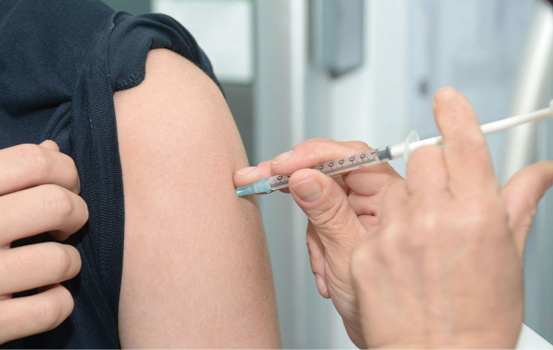
SWEDISH research has revealed that women growing up in areas with school-based human papillomavirus (HPV) vaccination programs were less likely to have serious pre-cancerous changes in their cervix - even if they themselves were unvaccinated.
The study evaluated health data on over 800,000 women in Sweden born between 1985-2000 who had not received an HPV vaccine to look for changes in the rate of high-grade cervical lesions as vaccination policies changed in the country.
While HPV vaccination is known to greatly reduce the risk of serious cervical changes in people who are vaccinated, it is less clear whether it also protects those who are not vaccinated.
Four different vaccination phases were compared: opportunistic vaccination (1985-1988), subsidised programs (1989-1992), catch-up programs (1993-1998), and school-based vaccination (1999-2000).
The researchers found that unvaccinated women born in 1999-2000 who grew up in the era of a school-based vaccination program had about half the risk of developing a serious cervical lesion compared to unvaccinated women born from 1985-1988, when vaccination was less common.
While acknowledging that it was an observational study and there may be other factors involved, the researchers said school-based HPV vaccination programs play an important role as a cost-effective strategy to reduce cervical disease and cancer risk not only in vaccinated individuals, but across entire populations.
"This finding shows that the herd effect can be achieved through high-coverage HPV vaccination," they concluded.
Read the paper HERE. KB
The above article was sent to subscribers in Pharmacy Daily's issue from 12 Jan 26
To see the full newsletter, see the embedded issue below or CLICK HERE to download Pharmacy Daily from 12 Jan 26