


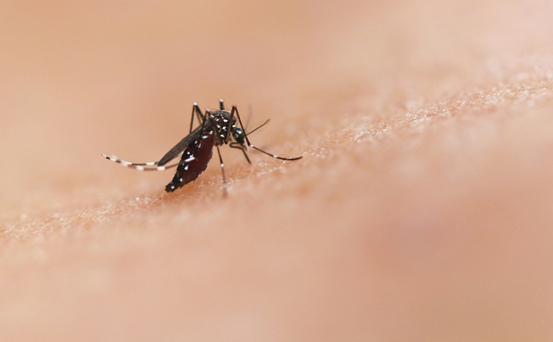
HOLIDAY makers are being urged to stay vigilant against mosquito bites this summer, as warmer temperatures heighten the risk of Ross River virus outbreaks, especially in riverland and coastal regions.
Ross River virus is common in Australia, with around 3,000 cases reported annually, and causes a rash, fever and joint pain.
A scoping review led by the University of Adelaide analysed 30 studies looking at the disease and temperature in Australia, finding that Ross River virus risk increases when temperatures rise, but there were differences across geographic regions.
"It is very hard to predict Ross River virus outbreaks, with a complex range of factors contributing to increased risk, including rainfall, humidity, and stagnant water conditions," said lead author Christina Varghese.
"But we know that cases are more likely when temperatures are between 17 and 31 degrees, with infections spiking at around 26 degrees," she explained.
"That's why it's important for Australians to be alert and protect themselves from mozzie bites over the Christmas and New Year period," Varghese said.
Terry Slevin, CEO of the Public Health Association of Australia, said that Australia's new Centre for Disease Control (CDC) will need to watch these issues closely.
"As the Australian weather warms due to climate change, we are likely to see different parts of Australia exposed to mosquito carried diseases like Ross River Fever and Barmah Forest virus.
"Australia's CDC will be monitoring these issues and is already providing advice on mosquito bite prevention," he said.
This includes using insect repellents available from pharmacies that contain diethyltoluamide (DEET), picaridin or oil of lemon eucalyptus (OLE), and following the instructions on the label. KB
The above article was sent to subscribers in Pharmacy Daily's issue from 17 Dec 25
To see the full newsletter, see the embedded issue below or CLICK HERE to download Pharmacy Daily from 17 Dec 25